
We frequently use the word "property" as a general term when addressing collection fortune. However, not all assets are equal in the eyes of the law and your bank account. Knowing the difference between moveable and immovable property is the first step towards a wise real estate investment strategy, regardless of whether you are searching for a five-star property in Mumbai or diversifying your portfolio with stocks and gold. This is an easy to read blog of these terms and why they are important for your financial future.
Table of Contents
What is Movable Property?
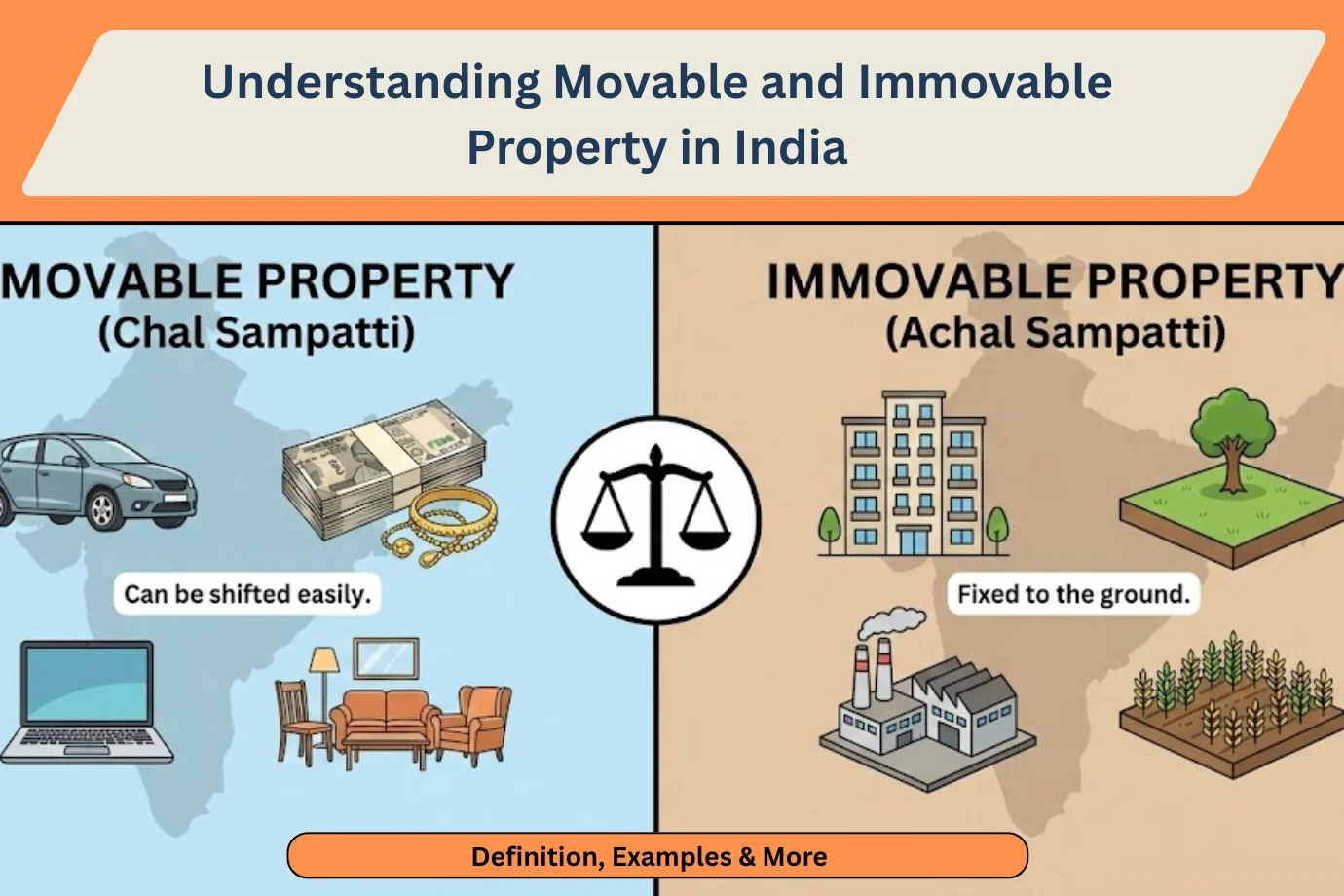
Movable property is the property whose original form is not changed through physical movement. These properties are tangible and they do not have any fixed location. Such properties are owned by private organizations, parties and governments. It falls under the laws regulating its use, transfer and taxation.
Key Features of Movable Property:
-
Transportable: The Movable property possesses the characteristics of being moved from one place to other without suffering loss or damage of inherent value.
-
Tangible and Intangible: Movable property consists of the tangible kind, first type that are books and cars, and intangible type that are stocks, bonds and intellectual property.
-
Low Formality: The Movable property transfer requires less legal formality than immovable property. No registration and deeds are required.
-
Depreciation: The Movable property depreciates faster because it gets old with time and outdated due to technological advancements, and changes in market value.
Examples include: Furniture, Vehicles, Electronics, Art pieces, Stocks and bonds, Jewelry, and valuables
What is Immovable Property?
Immovable property refers to land and anything permanently attached to it. If moving it requires a bulldozer and results in a pile of rubble, it’s immovable. this category includes that dream property in Mumbai you’ve been scouting, as well as the minerals under the soil and the trees rooted in the ground. Ownership of immovable property is subject to strict regulations, which include the processes for property registration, transfer, and laws related to inheritance.
Key Features of Immovable Property:
-
Fixed Location: These properties are permanent in location.
-
Subject to Real Estate Law: It falls under real estate law, which deals with their purchase, sale, inheritance, and transfer. These laws vary by location and are more complex than those for movable property.
-
Legal Complexity: The laws governing the transfer of immovable property are strict and involve formal procedures like title deeds, registration, and sometimes government approval.
-
Appreciation: Immovable property investment usually increases in value over time, making it an important asset for investment and wealth generation.
Examples include: Residential plots, apartments, villas, buildings, farmhouses, and factories.
Difference Between Movable And Immovable Property
Understanding the difference between movable and immovable property helps you navigate taxes, loans, and inheritance.
|
Aspect |
Movable Property |
Immovable Property |
|
Transfer Process |
Simple delivery or invoice. |
Requires stamp duty and registration. |
|
Taxation |
Generally subject to GST. |
Subject to property tax and stamp duty. |
|
Value Trend |
Mostly depreciates (loses value). |
Generally appreciates (gains value). |
|
Legal Control |
Sales of Goods Act (1930). |
Transfer of Property Act (1882). |
|
Financing |
Used for "pledged" loans (e.g., gold loans). |
Used for mortgages (e.g., home loans). |
Why Should You Care?
Understanding the difference between movable and immovable property is not just a legal concern; this distinction hits your wallet in three major ways:
-
Registration: Vehicles must be registered with the RTO, but movable property frequently does not. It is necessary to register immovable property with the land revenue agency.
-
Inheritance: Probate or legal succession certifications are frequently needed for immovable property. Transferring movable property usually requires less paperwork.
-
Loan Power: Banks have varied perspectives on loan power. Since immovable property is sometimes regarded as "safer" collateral, you can obtain larger loans with cheaper interest rates.
Legal and Practical Implications
Here’s the difference between movable and immovable property in property law, along with its legal and practical implications.
|
Aspect |
Movable Property |
Immovable Property |
|
Transfer |
Simple transfer via delivery or sale agreement |
Requires a sale deed |
|
Registration |
No mandatory registration (except vehicles, shares) |
Registration is mandatory
|
|
Ownership |
Easy to prove ownership via receipts/possession |
Ownership litigation tends to be longer and complex |
|
Taxation |
Subject to sales tax, GST, excise duty |
Subject to property tax, stamp duty, and capital gains tax |
|
Security |
Can be collateralized through hypothecation or pledge |
Commonly mortgaged for secured loans |
|
Legal Disputes |
Simpler disputes under the contract/sale of goods law |
Disputes involve land records, title deeds |
|
Succession |
Divided among heirs quickly |
Often more contentious due to high value and indivisibility |
|
Inheritance |
Distributed according to wills or personal property laws |
Requires registration of the title transfer |
|
Usage |
Utilized for personal, commercial, or everyday use |
Offers long-term advantages including investment, commercial, or residential |
|
Value |
Generally depreciates over time |
Often appreciates over a period of time |
Conclusion
Whether you are navigating the high-stakes world of property in Mumbai or just organizing your personal assets, knowing where your wealth sits is vital. Property investment is a marathon, not a sprint, and the legal category of your assets determines the rules of the race. At Keystone Real Estate Advisory, we offer a wide range of commercial and residential properties in Mumbai, catering to all types of buyers. Our team assists you in choosing the right investment property by analyzing relevant market indicators like demand trends, rental yield, future appreciation, and other indicators.
FAQ's
1. What is movable property?
A: Movable property includes assets that can be easily shifted from one place to another without changing their form, such as vehicles, furniture, jewelry, or financial assets like stocks and bonds.
2. What is immovable property?
A: Immovable property refers to land and anything permanently attached to it, such as houses, apartments, buildings, or plots. Moving it requires demolition or machinery.
3. What is the main difference between movable and immovable property?
A: Movable assets are easy to transfer and usually depreciate, while immovable assets require formal registration and tend to appreciate in value over time.
4. Do both types of property require registration?
A: Movable property typically does not require registration (except for vehicles or shares), while immovable property must be registered with the government and involves stamp duty and legal documentation.