
Buying a home is exciting, but then comes the home loan part, and now you are on the hunt to find the best lender who can offer the maximum loan amount at the lowest interest rate possible. But before taking the home loan, one should not miss out to check the interest rate system. A home loan can offer a fixed or floating interest rate. You need to understand which home loan interest is better for first-time homebuyers.
There's no one answer that works for everyone. What is right for first-time buyers can be very different from what works for the real estate investors. So let's go through fixed vs floating home loan interest rates in simple words so that you can make an informed decision before jumping into the huge home loan payment.
Table of Contents
What is the difference between fixed and floating home loan interest rates?
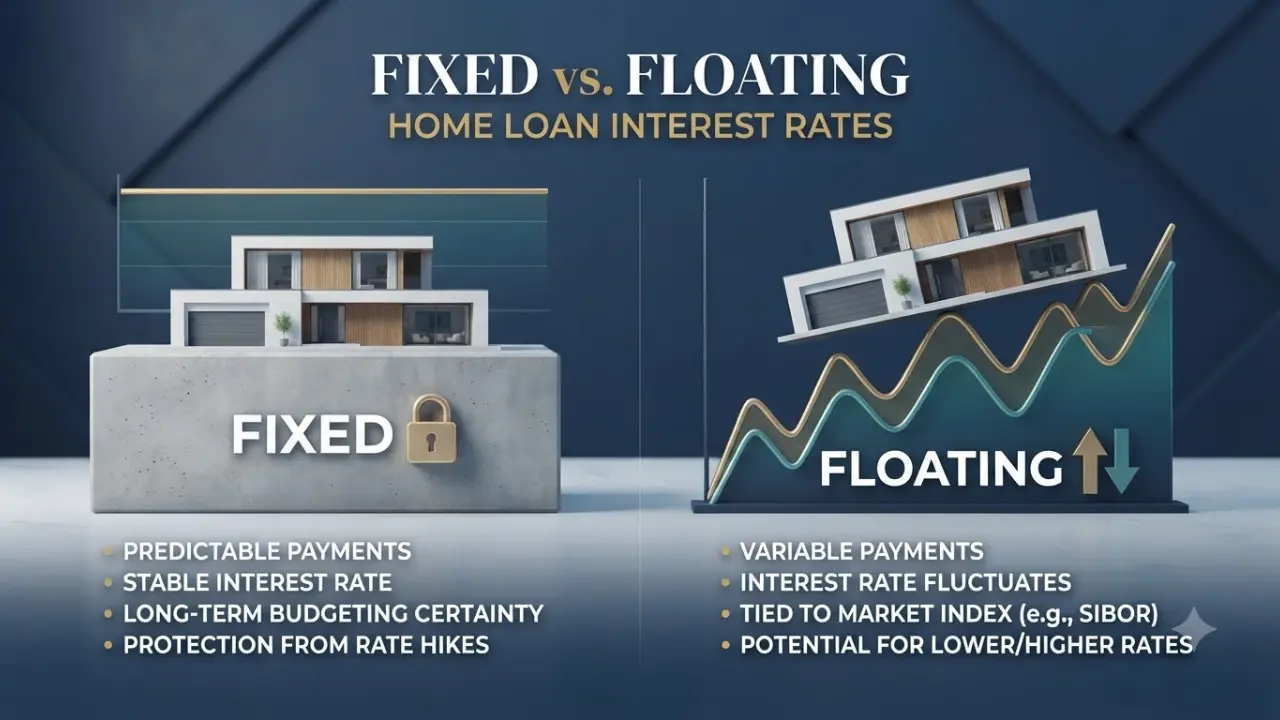
A fixed home loan interest rate means your interest rate does not change for your entire loan period, or at least for a good part of it. So your EMI stays the same every single month. It doesn't matter if the RBI changes rates or the economy goes up and down. Your number stays your number.
A floating home loan interest rate works the opposite way. It is connected to a market rate, usually the RBI's repo rate. So when that rate moves up or down, your loan rate moves too, and your EMI changes along with it. Sometimes this works in your favour. Sometimes it doesn't.
That's basically the difference between fixed and floating home loan interest rates. One gives you stability. The other gives you flexibility. Getting both at the same time is not really possible.
The Trade-Off Most People Don't Realise
Here's something banks don't always explain clearly. Floating rates usually start off lower than fixed rates, often by around 1% to 2.5%. That difference exists because with a fixed rate loan, the bank is protecting you from future rate increases, and you pay a little extra for that safety.
So this isn't really about which one is better overall. It's more about whether you want to pay a bit more now for certainty or take a chance with the market and possibly save more later.
Why Some People Prefer Fixed Rates
Some people simply like knowing exactly how much money is going out every month. No checking news updates, no recalculating your budget every few months. If this sounds like you, fixed rates might suit you better, especially if:
Your income is steady but doesn't leave much extra room to handle a sudden jump in EMI. This is common among salaried people who already have other monthly expenses to manage.
You are taking a shorter loan, around 5 to 7 years, where market changes don't usually make a big difference either way.
You have a feeling that rates are going to increase soon, so locking in now feels safer.
But there's a downside too. If rates fall later, you won't benefit from that. You'll still be paying the same higher rate while someone with a floating loan enjoys a lower EMI. Also, many fixed-rate loans charge a penalty if you want to close the loan early.
Why Some People Prefer Floating Rates
Floating rates suit people who don't mind a bit of uncertainty if it means they could save more money over time. This usually works well if:
You are taking a longer loan, something like 15 to 20 years, where rate changes tend to balance out over time and often work in the borrower's favour.
You have some backup savings or a second source of income that can absorb an EMI increase without disturbing your monthly budget too much.
You want the freedom to repay your loan early without extra charges, since floating-rate loans in India usually don't have prepayment penalties.
The risk is obvious, though. If rates go up, so does your EMI, and that can put pressure on a budget that wasn't planned for sudden changes.
So should I choose a fixed or floating home loan interest rate in India?
It really comes down to three simple things. How comfortable you are with risk, how long your loan tenure is, and what you think will happen to interest rates in the coming years.
If rates are low right now and expected to rise, choosing fixed can protect you from that future increase. But if rates are already high and expected to drop, floating could save you a good amount of money over time.
Ask yourself this too. How would you feel if your EMI suddenly went up by a few thousand rupees next year? If that thought makes you uneasy, a fix is probably the safer choice for your peace of mind, even if it costs slightly more. But if you can handle that change without much stress, floating might make more sense financially.
Which home loan interest rate is better for first-time homebuyers?
This is where it gets a little more personal. If it's your first home, chances are your savings are still growing and your EMI already takes up a big part of your monthly income. In that case, many advisors suggest going with a fixed rate, at least for the first few years, just to avoid one more unpredictable factor while you're already adjusting to a big financial responsibility.
That said, if you've done your research, have some savings set aside, and you're going for a longer loan tenure, floating rates can actually turn out cheaper for first-time buyers as well. Especially since most floating loans let you repay early without any penalty, giving you more flexibility as your income grows.
There's no fixed rule that works for everyone here. It really depends on how much certainty you need today versus how much risk you're okay with taking on.
The Bottom Line
The fixed vs floating rate home loan in India decision doesn't have one correct answer for everyone. It has an answer that fits your own situation best. Fixed rates give you peace of mind for a slightly higher cost. Floating rates give you a chance to save money but ask you to be comfortable with some uncertainty.
Before signing anything, take some time to calculate both options properly. Ask your bank how rates have changed over the years. And if you're still confused, talking to a financial advisor for a few minutes could save you from regretting your decision later.
At the end of the day, the best choice is simply the one that lets you sleep peacefully at night while still making sense for your financial future.
Explore properties in Mumbai, Thane, or Pune on the Keystone Real Estate Advisory Portal. Because we only list the legal projects that are eligible for home loans so that our clients don’t have to go through any unnecessary stress.