
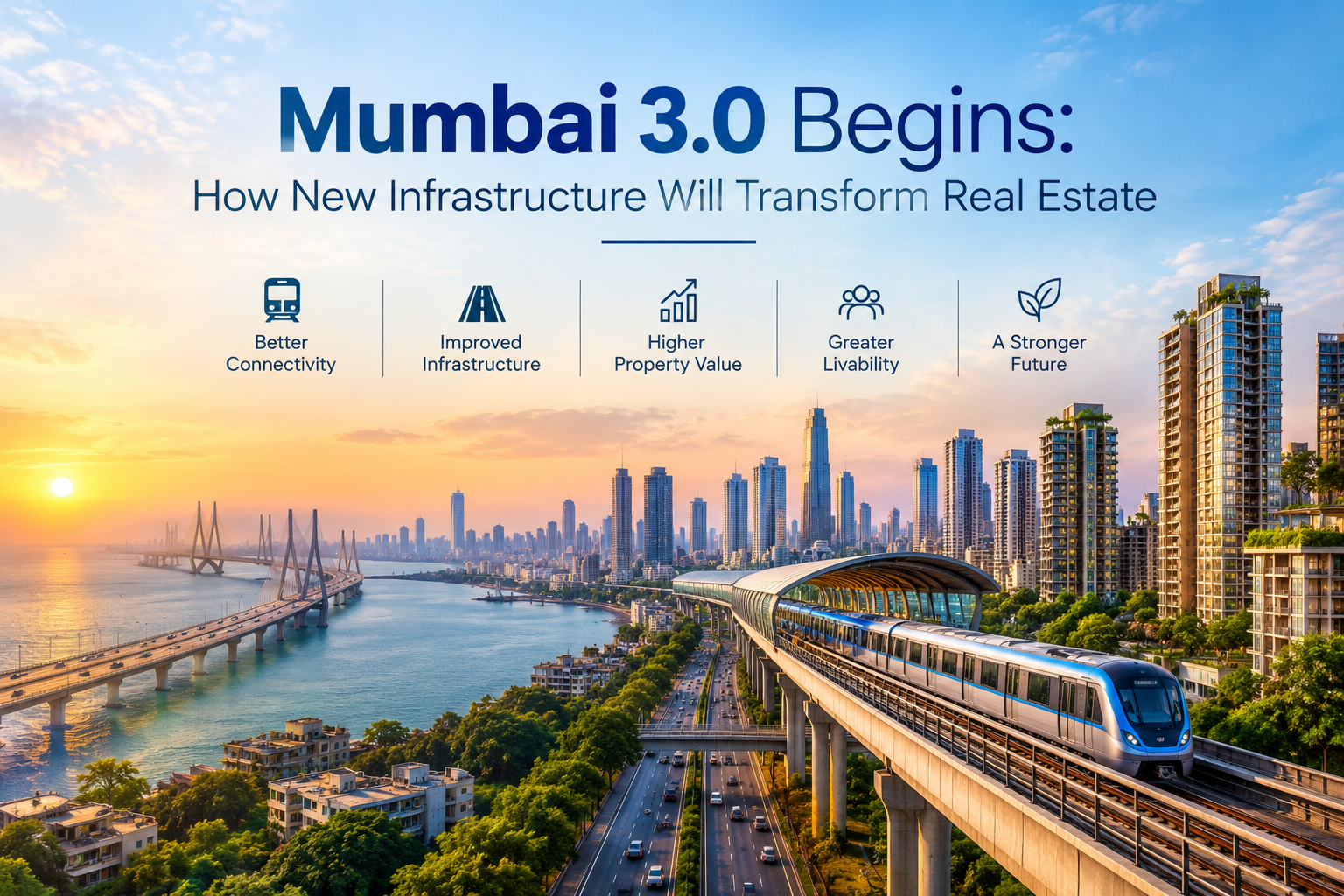
Mumbai 3.0 is the new trend in the Mumbai property market. Chief Minister Devendra Fadnavis talked about it again this month at the Real Estate and Infrastructure Investors' Summit in Mumbai, and it's not just a catchy label for another government scheme. It's shaping up to be one of the bigger shifts in how this city, and the region around it, gets planned.
What Is Mumbai 3.0 and How Will It Impact Real Estate?
Mumbai 1.0 was the old island city, built up over centuries as a port town. Mumbai 2.0 was the sprawl that followed, the suburbs, the satellite towns, everything that grew once the original city ran out of room. Mumbai 3.0 is the next chapter, and this time it's happening largely across the harbour, in Raigad district, close to where the Atal Setu touches land.
The state cabinet cleared the land policy for this new city, often referred to as the Karnala Sai Chirner New Town, back in February this year. It's a massive stretch, over 300 square kilometres spanning more than a hundred villages across Uran, Panvel, and Pen. The MMRDA has been named the development authority for the project, and it's already brought in a Singapore-based planning firm to draw up the concept and vision documents. This isn't a proposal sitting on a shelf somewhere, money has actually been allocated, with roughly four thousand crore earmarked for the coming financial year alone.
How Will Mumbai 3.0 Boost the Mumbai Real Estate Market?
Here's where it gets interesting for anyone tracking flats in Mumbai or thinking about where to invest next. Infrastructure has always been the thing that turns empty land into something worth buying, and this region is getting an unusually concentrated dose of it all at once.
The Navi Mumbai International Airport has already taken its first commercial flights, and once it scales up it's expected to handle tens of millions of passengers a year. The Atal Setu has cut travel time between South Mumbai and the areas across the harbour down to something that feels almost unreal compared to a few years ago, what used to be an hour and a half journey is now a matter of minutes on a good day. Add in the ongoing metro expansion, including new lines planned to serve Navi Mumbai and the eastern belt, and you start to see why builders and investors are paying closer attention to this side of the city.
Areas like Panvel and Ulwe are already seeing steady buyer interest, partly from long time investors who got in early, but increasingly from actual home buyers too, families who no longer think of Navi Mumbai as somewhere separate from Mumbai proper. That mental shift matters as much as the physical infrastructure does.
Mumbai 3.0 Infrastructure Projects and Property Growth
None of this happens in isolation. The wider infrastructure push behind Mumbai 3.0 real estate includes redevelopment across the older parts of the city, new economic corridors, work on Vadhavan Port, and a growing emphasis on technology-led governance to speed up approvals and planning. The MMRDA's total infrastructure spending across these projects now runs well into the tens of thousands of crores, and at recent investor summits abroad, the state has pulled in commitments worth billions of dollars from private players, including a sizeable one from Blackstone specifically tied to the new town project.
Big infrastructure announcements in India have a track record of running behind schedule, and a new town of this scale won't have schools, hospitals, and daily conveniences fully in place for years, even after the roads and metro lines are functional. Anyone looking at the Mumbai property market from 2026 onwards should treat this as a long game rather than a quick flip.
Still, the direction is fairly clear. Mumbai infrastructure development isn't going to happen by squeezing more buildings into the same old pockets of the city, it's going to happen by physically expanding what "Mumbai" even means. For buyers and investors willing to look a little further out and be patient, that expansion is exactly where the opportunity is likely to sit over the next several years.
If you're trying to figure out where Mumbai 3.0 fits into your own property plans, it helps to talk to people who track these corridors closely rather than going purely off headlines. The Keystone Real Estate Advisory team can walk you through what's actually moving on the ground right now and where it might make sense to get in early.