
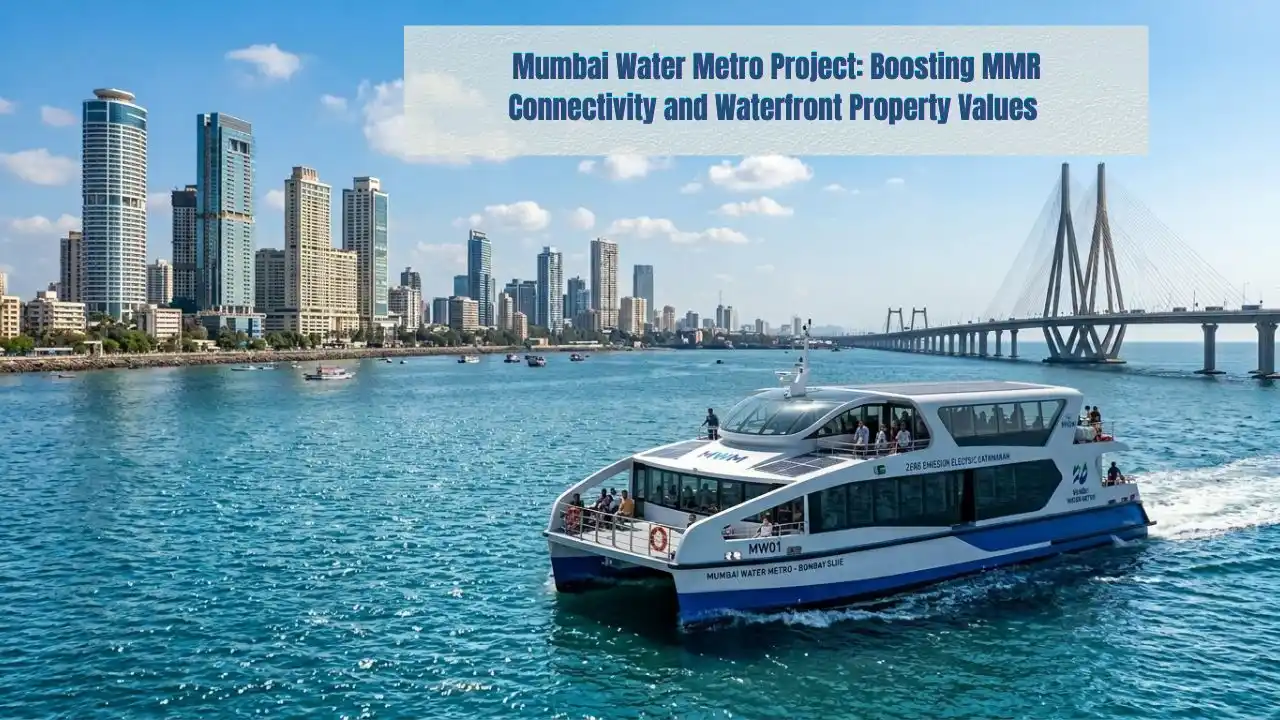
Mumbai's daily transportation of millions of people has always been mostly dependent on highways, railroads, and metro networks. However, the city is now considering its canals and coastline as the next major transit option due to growing traffic and longer commutes.
One of the most noteworthy transportation projects in the region is the Mumbai Water Metro Project. The project promises to improve connections between Mumbai, Thane, Navi Mumbai, Vasai, and other coastal districts, reduce traffic congestion, and shorten travel times by connecting important destinations within the Mumbai Metropolitan Region (MMR) with a cutting-edge water transport system.
In addition to improving transportation, the project is anticipated to provide real estate development prospects, especially in waterfront areas.
Mumbai Water Metro Project Overview
The Mumbai Water Metro Project, a proposed water-based public transportation system, will make use of Mumbai's extensive coastline, rivers, creeks, and harbor corridors.
The Maharashtra government recently approved the proposal, which was inspired by Kochi's successful water metro system. A group of contemporary electric and hybrid boats, several routes, and terminals are all part of the first phase, which is projected to cost about ₹6,067 crore.
Along with metro lines, road infrastructure, and railway upgrades, the project is a significant component of the larger Mumbai Metropolitan Region transportation expansion strategy.
Routes and Approval Updates for the Mumbai Water Metro Project
The Mumbai Water Metro project routes and approval updates are among the most commonly asked questions.
The project has already received approval from the Maharashtra government, and detailed planning is underway. Phase 1 is expected to include 16 routes and 26 terminals connecting major destinations such as:
-
Gateway of India
-
Bandra
-
Worli
-
Versova
-
Thane
-
Navi Mumbai
-
Kalyan
-
Vasai
-
Mira-Bhayander
-
Belapur
-
Nerul
The long-term vision is even bigger, with over 215 kilometers of waterways planned across the region.
Key Routes Expected in Phase 1
|
Route |
Current Travel Time |
Travel Time After Water Metro |
|
Colaba to Nerul |
85-100 mins |
40 mins |
|
Gateway of India to Vashi |
70-90 mins |
35 mins |
|
Belapur to Ferry Wharf |
90-110 mins |
45 mins |
Such travel-time reductions could significantly improve daily commuting for thousands of residents.
New Water Transport Network in Mumbai Metropolitan Region
The new water transport network in the Mumbai metropolitan region is designed to complement existing transport systems rather than replace them.
Passengers will be able to seamlessly connect from water metro terminals to:
-
Mumbai Metro lines
-
Local railway stations
-
BEST bus services
-
Upcoming infrastructure projects
This combined strategy will reduce the burden on congested highways and suburban rail lines while strengthening the MMR water transport network.
It means less dependency on congested highways and more transport options for daily commuters.
Why the Mumbai Water Metro Matters
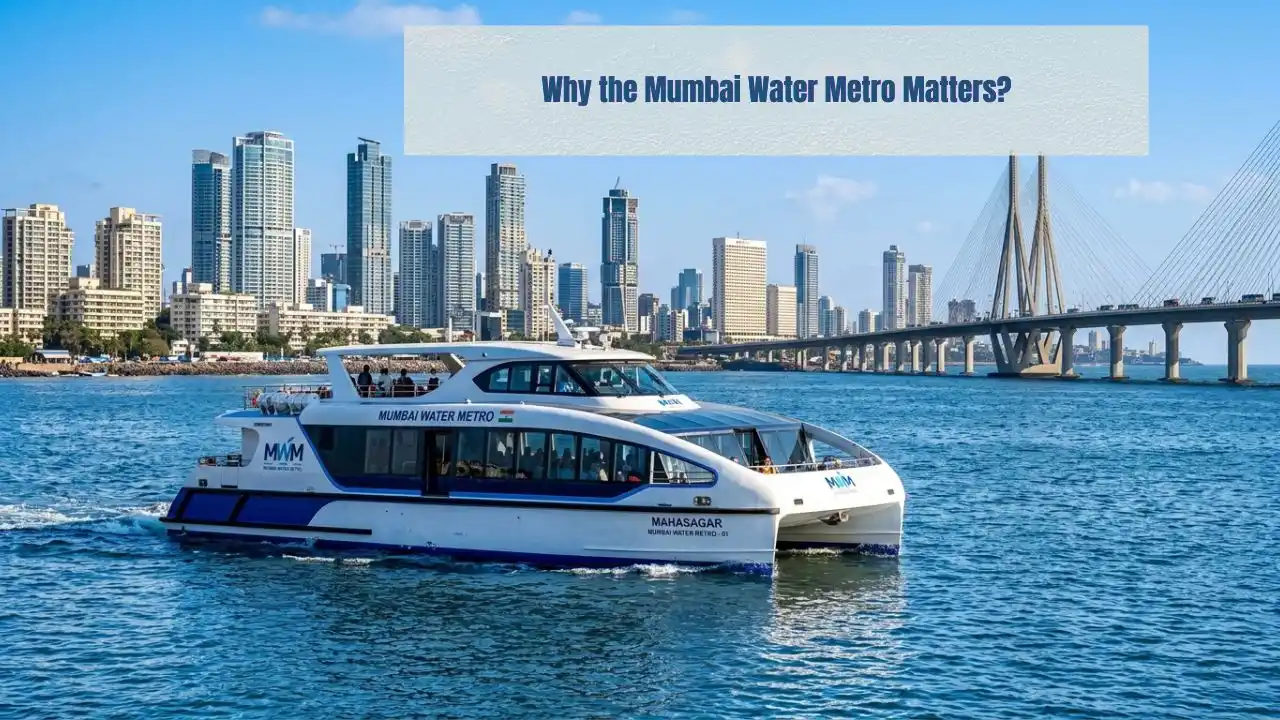
Mumbai's position has always provided an underappreciated ease of transit. Despite the fact that the city is surrounded by water, most citizens still rely on roads and railroads for daily mobility.
By integrating waterways into the city's major transit system, the Water Metro modifies that.
Among the primary benefits are the following:
Quicker Travel
By taking advantage of water paths, commuters can completely escape traffic bottlenecks and save a significant amount of time every day.
Eco-Friendly Transportation
The project will reduce carbon emissions and encourage sustainable urban growth by using electric and hybrid boats.
Enhanced Local Connectivity
Major business centers and job hubs will become more accessible to areas that presently have poor direct connectivity.
Decreased Traffic Jams
Road traffic congestion is predicted to drop in a number of important corridors as more people choose water transportation.
How Will the Mumbai Water Metro Affect Real Estate Prices in MMR?
How the Mumbai Water Metro will impact MMR real estate prices is one of the main topics of contention surrounding the project.
Historically, major infrastructure projects have had a direct impact on Mumbai property values. The Mumbai Metro, Eastern Freeway, Coastal Road, and Trans-Harbour Link have all contributed to price hikes in nearby communities.
It is anticipated that the Water Metro would have a similar impact.
Enhanced Accessibility Raises Demand
More people are thinking about relocating to previously inconvenient places when commuting becomes easier.
This increased demand often leads to:
-
Higher residential property values
-
Stronger rental demand
-
Increased commercial activity
-
New real estate development
Growth Beyond South Mumbai
The project is expected to extend growth opportunities beyond traditional hotspots and into emerging waterfront locations.
Areas likely to benefit include:
-
Thane Waterfront
-
Navi Mumbai
-
Vasai
-
Mira-Bhayander
-
Kalyan
-
Versova
-
Madh Island
-
Sewri
-
Wadala
These locations could attract both end-users and investors seeking long-term appreciation.
Water Metro Impact on Property Prices
The water metro impact on property prices could be particularly significant near proposed terminals.
Real estate experts often observe that infrastructure-led developments create value through improved accessibility. Properties located close to transport hubs typically enjoy stronger demand and better resale potential.
Potential Real Estate Benefits
|
Factor |
Impact on Property Market |
|
Faster Connectivity |
Higher buyer demand |
|
Reduced Travel Time |
Better livability |
|
Waterfront Accessibility |
Premium pricing |
|
Commercial Growth |
Increased employment opportunities |
|
Improved Infrastructure |
Long-term capital appreciation |
While exact price appreciation will depend on project execution and market conditions, many analysts believe terminal-adjacent properties could see notable value growth over the next few years.
Mumbai Waterfront Real Estate Values May Rise Further
The project is also expected to influence Mumbai waterfront real estate values.
Waterfront properties have always enjoyed a premium due to:
-
Limited supply
-
Scenic views
-
Better ventilation
-
Lifestyle appeal
The Water Metro adds another important advantage—practical connectivity.
Previously, some waterfront areas offered beautiful surroundings but lacked convenient transport options. The new network could change that perception by making coastal living more accessible for daily commuters.
This may strengthen demand for waterfront developments in locations such as:
-
Bandra
-
Juhu
-
Versova
-
Colaba
-
Thane Waterfront
-
Navi Mumbai Waterfront Zones
These areas might become even more appealing to investors and homeowners as connectivity increases.
What Does This Indicate for Prospective Homeowners?
Infrastructure continues to be one of the best predictors of future growth for prospective homeowners in the Mumbai Metropolitan Region.
Although the Mumbai Water Metro Project is still in the planning and development phase, the real estate industry is already showing interest in it due to its potential impact.
Buyers looking for long-term investment opportunities may consider tracking developments in:
-
Thane
-
Vasai-Virar
-
Mira Road
-
Kalyan
-
Versova
-
Sewri
Areas located close to future terminals may benefit the most once operations begin.
There is more to the Mumbai Water Metro Project than just better transportation. It represents a more extensive strategy for a Mumbai metropolitan region that is more integrated, sustainable, and effective.
The project will strengthen the Mumbai Metropolitan Region's water transport network, shorten travel times, and develop new growth corridors throughout the region as part of the continuing public transit expansion.
Final Thought
It is estimated that the Mumbai Water Metro Project would change how people move around the Mumbai Metropolitan Area. The project intends to enhance communication between Mumbai, Thane, Navi Mumbai, Vasai, Kalyan, and several other waterfront locations by implementing a contemporary and effective water transport system.
Large-scale infrastructure projects tend to open up new possibilities for capital growth for investors and homebuyers. Demand may rise in areas close to planned water metro terminals as transportation becomes easier and connectivity gets better.
Monitoring emerging micro-markets along the intended routes may help with long-term investment planning, even while the project is still in its early stages of development.
If you're considering buying a home or investing in a property along future Water Metro corridors, Keystone Real Estate Advisory will help you locate high-potential areas, evaluate market trends, and make well-informed real estate selections based on your financial goals. Our consultants may guide you in the right way of prospects that align with upcoming infrastructure-led growth because they have a solid grasp of the Mumbai Metropolitan Region.