
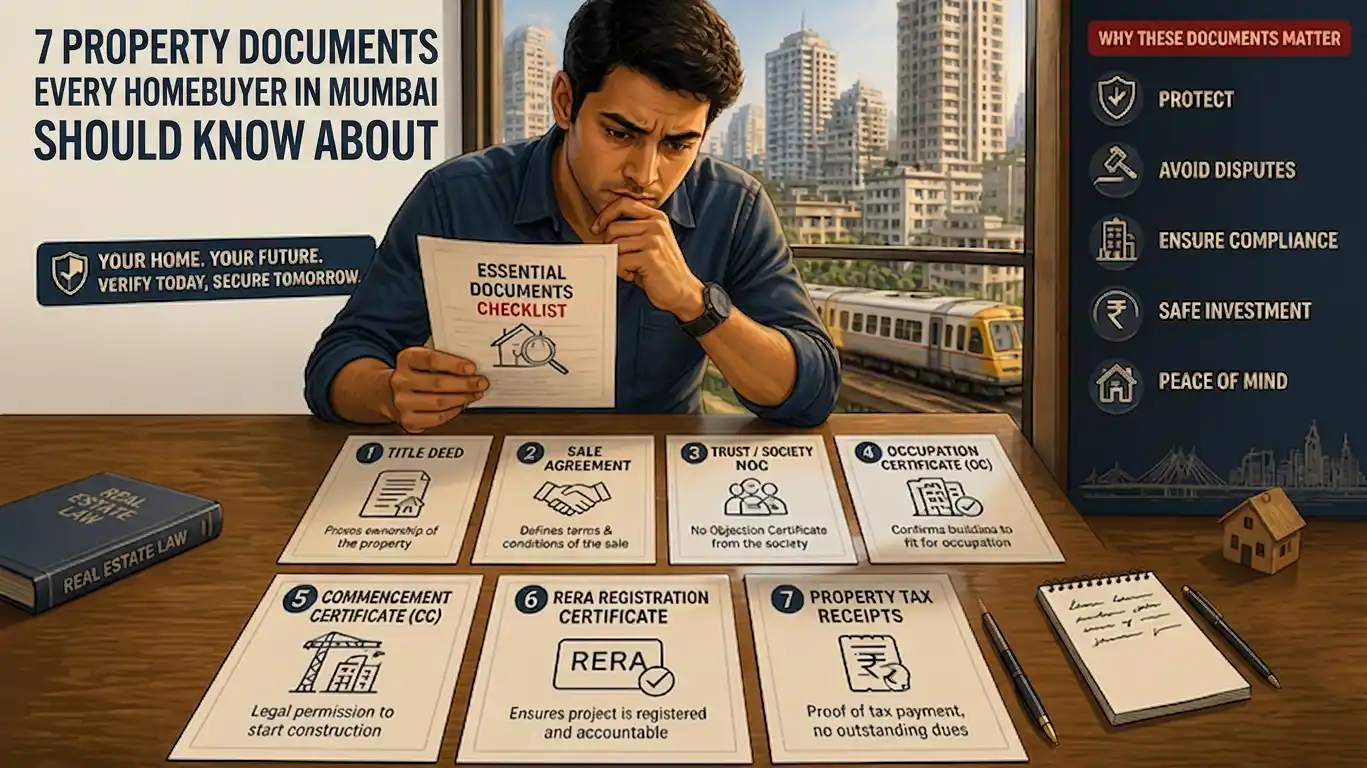
Buying a flat in Mumbai is a mix of excitement and mini panic. One minute you're picturing your furniture in the living room, the next you're staring at a pile of legal papers you barely understand, wondering if you're about to make the biggest mistake of your life.
You don't need a law degree to buy a home safely. You just need to know what are the important property documents required when buying a home in Mumbai and what to look for in each one. This city has a strange real estate history full of resales, redevelopment projects and buildings that have quietly changed hands over decades. A flat can look absolutely perfect and still be sitting on a shaky legal foundation underneath.
So before you get distracted by tile samples and modular kitchens, let's slow down and go through the Mumbai property documents that deserve your full attention.
Table of Contents
1. Title Deed
A title deed shows who has owned the property over the years and whether that ownership actually passed on correctly each time. If there's a break somewhere in that chain, or the seller's name doesn't quite match what's on record, you could end up buying someone else's legal mess along with your new home.
What you want to check here:
The seller's name matches the title deed exactly. The ownership history goes back at least twelve to fifteen years, especially if it's an older or resale flat. There's no ongoing dispute, court case or unresolved family claim hiding in the background.
Most lawyers will tell you this is the first thing they look at, and honestly, it should be the first thing you ask for too.
2. Sale Deed and Agreement for Sale
The Agreement for Sale is the document you sign at the booking stage. It spells out the price, the payment schedule, the carpet area you're actually paying for and the possession date. Read this one properly, twice if you have to, because this is where most fights with builders begin.
The Sale Deed comes later. It's the final document that legally transfers the flat into your name once it's registered with the Sub Registrar's office. Until that registration happens, you're not really the owner yet, no matter how much money you've already handed over.
If you're making a list of documents to check before buying a flat in Mumbai, this pair sits right at the top.
3. RERA Registration Certificate
Every project in Maharashtra with more than eight flats or over five hundred square metres of land needs to be registered under MahaRERA, the state's real estate regulator. This one document tells you a lot. It confirms the builder is accountable for delays, that a chunk of collected funds sits safely in an escrow account, and that the project's layout and timeline are out there for anyone to check.
So how can you verify property documents in Mumbai before buying a flat, especially this one? It's actually pretty simple.
Go to maharera.mahaonline.gov.in. Search using the project name, developer name or the RERA number itself. Mumbai projects usually follow a format like P51900XXXXXX. Compare what shows up online against what the builder has told you.
Small warning here. If a builder says the project is "RERA applied," that phrase means absolutely nothing legally. Only an actual confirmed number on the portal offers you any protection.
4. Occupancy Certificate and Completion Certificate
People mix these two up all the time, so let's clear it up. The Completion Certificate simply confirms the building was constructed according to the approved plan. The Occupancy Certificate goes further and certifies the building is actually safe to live in, with water, electricity and drainage connections properly approved.
Please don't move in without the OC. It's not just paperwork for the sake of it. Living in a building without one is technically illegal in Mumbai, and its absence often means fire safety or structural checks were never fully cleared. If a project has been "ready" for months and the builder gets vague when you ask about the OC, take that seriously.
5. Encumbrance Certificate
This tells you whether the property has any pending loans, mortgages or legal claims attached to it. In a city where flats change hands over and over, an old unpaid loan from a previous owner can quietly stick to the property and become your headache instead of theirs.
You can get this from the Sub Registrar's office, and it's worth asking for a record covering the last twelve to fifteen years rather than just the most recent sale.
6. Approved Building Plan
Every building in Mumbai is supposed to be built exactly as per a plan approved by the municipal authority, which for most of the city is the BMC. This plan lays out the number of floors, the layout, the setbacks and what each part of the building is meant to be used for.
Why should you care about this as a buyer? Because unauthorised extra floors, extended balconies or terraces turned into living rooms happen more often in Mumbai than people assume, and they can lead to demolition notices years down the line. Compare the approved plan against what's actually standing. If your flat's floor doesn't appear on the sanctioned plan, that's not a small issue, that's a dealbreaker.
7. Property Tax Receipts, NOC and Share Certificate
Property tax receipts show all dues have been cleared by the seller, since unpaid tax can quietly become your liability. An NOC from the society or builder confirms there are no pending society dues and that the transfer has been properly acknowledged. A share certificate, common in Mumbai's cooperative housing societies, proves you're a member of the society and not just the owner of four walls. And if you're taking a home loan, keep your sanction letter and disbursement papers organised too, since the bank will want to see most of the documents above before releasing funds.
A Quick Checklist Before You Sign Anything
If someone asks you, what documents should I check before buying a flat in Mumbai, here's the short version you can keep in your back pocket.
Title deed for clean ownership. Agreement for Sale and Sale Deed for the terms and final transfer. RERA registration verified on MahaRERA. Occupancy Certificate and Completion Certificate. Encumbrance certificate to rule out hidden loans. Approved building plan matching the actual construction. Tax receipts, society NOC and share certificate.
Final Thought
Flats in Mumbai are expensive, and going through paperwork is nobody's idea of fun. But it's the least exciting part of the process right up until something goes wrong, and then suddenly it's the only thing that matters. Give yourself a week or two to have a property lawyer review these seven documents properly before any money changes hands. It's a small effort compared to the price of the flat itself, and it's really the only thing standing between owning your home outright and owning a very expensive problem.
For right guidance on property buying, connect with Keystone Real Estate Advisory team