
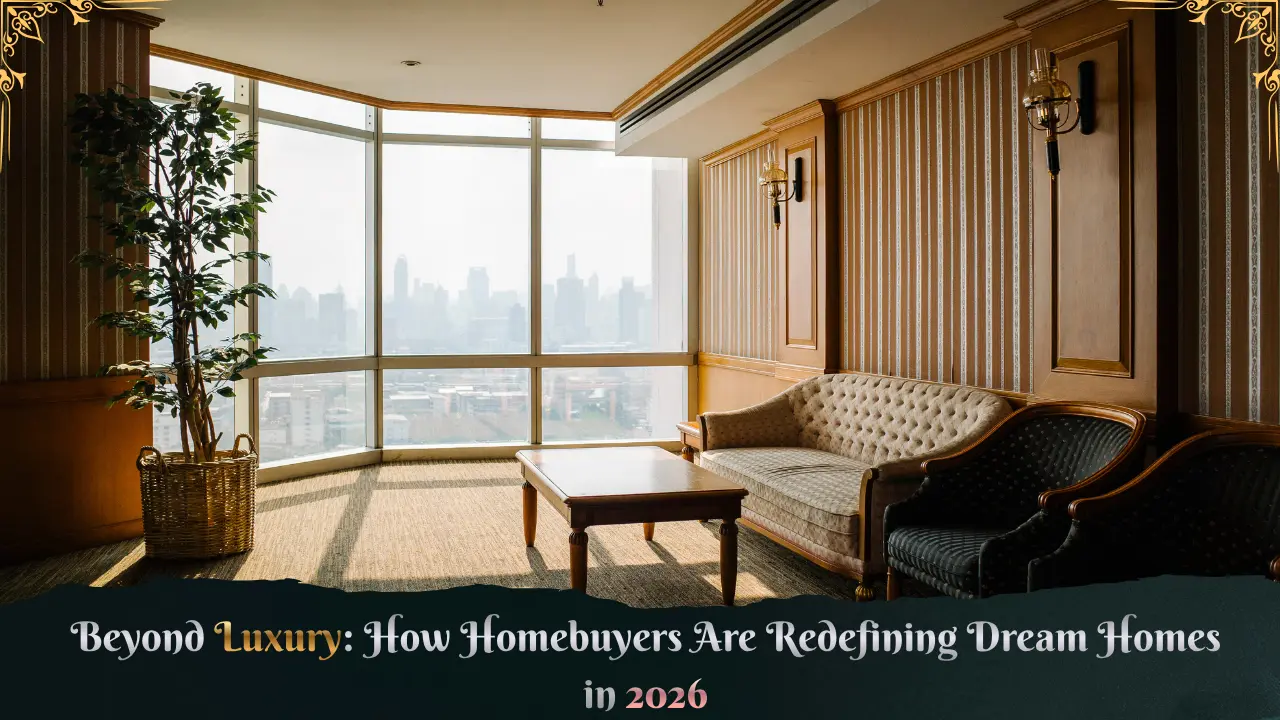
The preferences of luxury homes today have altered since 2006 when a "dream" house might have been characterised by opulence, e.g., a high-end entrance with extensive marble, gold-plated fittings, and potentially a grand water feature competing with an upscale hotel. This has transformed into an increasingly temperate focus on feelings such as calmness, wellbeing, and sustainability in 2026, as opposed to being captivated by what you see.
The criteria of luxury homes 2026 in India are shifting towards how a property affects your mood following a busy, loud day rather than purely, or to varying degrees, based on price or geographic location (i.e., neighbourhood) of the home. The concept of luxury real estate has been changing for years, and it is no longer reserved only to cities like Mumbai but also extends to places like Pune which provide a quieter way of living.
The following are the desires of the luxury homes 2026 in India
Table of Contents
1. From Opulence to Experience: The New Buyer Psychology
Instead of merely purchasing square footage, modern times HNI (High Net Worth Individual) or NRI are purchasing a "intelligent ecosystem." The greatest views of the Arabian Sea can still be found in Mumbai's luxury real estate, but the emphasis has shifted inward, toward holistic living.
The necessity for adaptable rooms brought on by the pandemic has persisted. Nowadays, buyers look for residences that support deep wellness, upscale leisure, and distant work. Demand for 4 BHK luxury flats in Mumbai with yoga terraces, meditation areas, and even "wellness rooms" with air purification and circadian lighting is rising in Mumbai. Simply said, people are not seeking grandeur. They are seeking calm. They like long-lasting settings, decent materials, and peaceful environments.
2. The Green Mandate: Sustainability as a New Gold Standard
By 2026, environmentally damaging homes will no longer be considered as being of high quality. Adding greenery to luxury homes is key to long term sustainability, mental health, and air quality in addition to looking nice.
In 2026 majority of luxury homes will be assessed based on whether they have a LEED or IGBC (Indian Green Building Council) certification.
Why green spaces matter in luxury housing - In response developers will be adding the following features:
-
Energy Independence: Having battery storage and solar panels will no longer be considered an upgrade; but rather a necessity to safeguard against unpredictable utility costs.
-
Biophilic Design: The use of natural stone, open air courtyards, and vertical gardens to bring nature inside the home.
-
Water Management: In premium residential projects in Mumbai and places where water conservation is important, low flow fixtures along with rain water harvesting are now becoming standard.
3. Smart Homes: Beyond Gadgets to "Indispensable" Living
With good cause, the Indian smart home market is expected to expand by more than 12% this year. Technology is being employed to create "adaptive" surroundings in Pune's contemporary luxury residences.
We are discussing more than just using voice commands to play music. We are discussing:
-
Systems that recognize your routine and adjust the temperature before you enter a space are known as predictive climate control.
-
Advanced Security: Biometric access and AI-powered surveillance that provide security in gated communities.
-
Health Technology: Touchless surfaces and HEPA filters guarantee that the house stays a secure haven.
For the tech-savvy consumer, technology has evolved from a "cool feature" to an absolute necessity.
4. Adaptive and Modular: A Home That Grows With You
One of the most exciting changes happening in 2026 is the trend towards modular and adaptable layouts. As families become more dynamic - with grandparents moving in or children needing designated learning spaces - this is creating new opportunities for builders to provide buyers with "future-proof" designs.
Some examples of the above include the following:
-
Walls that can easily be shifted: Processed as modular construction, allowing for room repurposing without the need for extensive remodelling or alterations to the structure.
-
Multi-use spaces: Examples include a guest room that transitions to a high-tech home office or a balcony that serves as a vertical kitchen garden.
Dur-able architecture: Using materials that will last long, sans a lot of maintenance over time, and can survive the severe Indian summer without much effort.
5. Timeless Surfaces – Seamless Visuals
In 2026, the visual direction of the home industry will be "seamless." Homeowners have decided to eliminate visual noise from their homes. Large-format slabs will be the primary surface material for high-end kitchens and baths because of their ability to minimize grout joints, providing an illusion of infinite space as well as ease of cleaning.
The three primary design influences of the next few years will be earth-tones/natural colors, textured/stone-like finishes and matte. The overall theme is "quiet luxury"; in other words, the design of a luxury home in Worli will feel substantial, permanent and real as opposed to being gaudy and temporary, like a villa in Kalyani Nagar.
6. The Battle of Location – Pune and Mumbai
Luxury projects in Mumbai continue to dominate the luxury residential market based on the amount of prestige they possess and the return on investment they generate. Modern luxury homes in Pune are very much on the rise.
-
Mumbai: The demand for upscale 4-bedroom units continues to be strong (i.e. Altamount Rd & Bandra-Kurla Complex) with the increasing use of "branded residences" (partnerships between developers and luxury hotel chains) that will provide concierge service along with world-class amenities.
Pune: Modern luxury homes in Pune is becoming increasingly competitive with many new developments being planned for Tier 2 cities. Buyers moving from Mumbai to Pune are driven by improved infrastructure and larger, more park-like (less dense) sites than are typically available in Mumbai.
What luxury homebuyers want in 2026 India?
If you’re currently looking to buy property, use this checklist to determine whether a property really meets the criteria for luxury in 2026:
|
Feature |
What to Look For |
|
Energy |
Solar panels, smart thermostats, and LED automation. |
|
Flexibility |
Can the layout be reconfigured as your family grows? |
|
Sustainability |
Rainwater harvesting and IGBC green certification. |
|
Wellness |
Air purification systems and dedicated "quiet zones." |
|
Durability |
Use of high-quality, low-maintenance finishes, such as large format slabs, will provide durability for the future. |
Final Thoughts by Keystone Real Estate Advisory
The effect of how lifestyle impacts home buying decisions has never been clearer than it is today. In 2026, a "dream home" is no longer simply an opulent structure; it has transformed into a functional home that impacts your health, cares for the environment, and incorporates technology to make life easier instead of more complicated.
For the well-informed buyer, sustainability, modular construction and health-based living are no longer fads or trends, but rather are investments in a lifestyle that can be enjoyed today and will continue to be relevant 100 years from now. When you think about true luxury, the main focus economies are not on the things you own but how well you live (your relationship with) those things.
Are you looking for your next heaven like place? Whether you are searching modern luxury homes in Pune or premium residential projects in Mumbai, keep this in mind: do not only search for marble and glass; search for living spaces that will support you and your work ethic.